















Justsystems Corporation is a software development firm that aims to help people realize their unlimited potential through the use of information technology. Since our founding in 1979, we have developed a wide variety of products, ranging from client applications to server systems. Throughout our history, we have provided our individual and corporate clients with software that marries the most advanced technology with the most visionary solutions. A public company since 1997, today we have around 1,000 employees, world wide.

Justsystems was founded with a simple goal: make it possible for people to use computers to express and share their thoughts and knowledge.
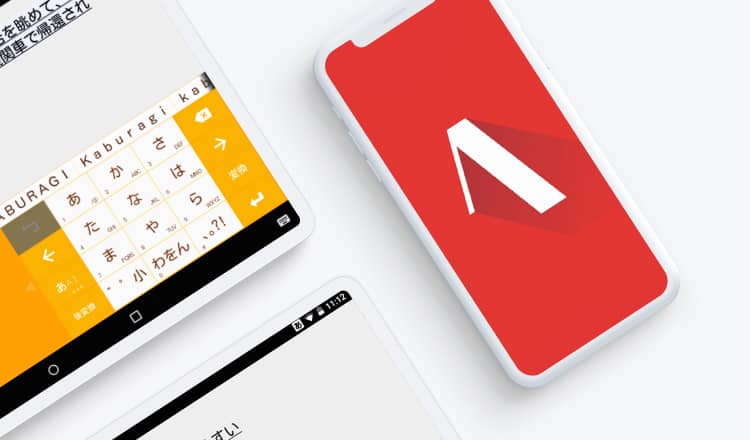
After many years of research in natural language processing technologies, we released ATOK, a text input system that incorporates advanced knowledge modeling to greatly improve the speed and accuracy of keyboard input into Japanese language documents. As software that parallels human language processing, ATOK transformed Japanese-language document processing and today remains the dominant technology in its field.
Using ATOK as our base, we subsequently developed a word processing application (1985), followed by a complete office suite, then by groupware and many other personal productivity applications.
Justsystems has continually focused on the core technology infrastructure as the fulcrum point for critical innovations. In 1988, we unveiled our Value Added Function (VAF) - the first of its kind open-architecture, plug-in system - that made it easy for users to add complex functions (such as spreadsheets and graphics) to our word-processing applications. In 1996, we launched our Dynamic Document Framework (DDF) as a successor to VAF. DDF is a compound document platform that facilitates editing of compound documents, separation of content and view, semantic comprehension, and knowledge sharing through the use of dynamic documents. DDF foreshadowed, and proved in the marketplace, many of the approaches and goals now being pursued in the world of XML (eXtensible Markup Language). DDF provided the foundation for Justsystems' first multiplatform application products, developed completely in Pure Java and introduced to the market in 1999.
Justsystems has been an influential advocate and adopter of open standards as a central element in software quality and innovation. Justsystems participates in the Unicode Consortium's universal character encoding standardization efforts and in the development of standards by the WWW Consortium (W3C). In addition, we have actively pursued standardization and openness by publishing our own technical specifications.
By the mid-1990s, information analysis and retrieval had become a key problem for medium- and large-scale organizations. To meet that need, in 1997 Justsystems (in collaboration with Professor David A. Evans of Carnegie Mellon University) developed a knowledge resource search system called ConceptBase that offers an intelligent solution to the information retrieval needs created by the explosive growth of corporate data and the Internet. ConceptBase combines unique vector search technology with natural language processing, and has now become the standard in Japan's enterprise market. In 2003, we extended our offerings in this area with the introduction of GrowVision, a comprehensive knowledge management environment that provides powerful support for discovery and use of the critical information that is latent in or transmitted via the Internet and intranets. Knowledge processing has now emerged as a central market and technical focus for Justsystems.
In November 2004, we reached an important milestone with the announcement of our xfy Technology at the XML Conference & Exposition held in Washington, D.C. xfy seamlessly allows the editing and display of multiple XML vocabularies within a compound document in a WYSIWYG (what-you-see-is-what-you-get) format. Building on the concepts and technologies introduced in DDF and GrowVision, xfy supports the emergence of XML as the defining standard for dynamic documents - by supporting not only standard XML vocabularies, but also those user-defined proprietary vocabularies necessary for complete flexibility and widespread adoption.